TBA
This group examines the history of the evolutionary synthesis of genetics and natural selection, and its impact upon agriculture, and theories of race and eugenics.
Meetings are held in Portuguese.
Upcoming Meetings
Friday, March 20, 2026, 12:00 - 1:30 pm EDT
Friday, April 17, 2026, 12:00 - 1:30 pm EDT
TBA
Friday, May 15, 2026, 12:00 - 1:30 pm EDT
TBA
Friday, June 19, 2026, 12:00 - 1:30 pm EDT
TBA
Past Meetings
-
TBA
-
TBA
-
TBA
-
TBA
-
TBA
-
Speaker
Prof. Gracyelle Costa Ferreira
Federal University of Rio de Janeiro (UFRJ)
Learn more: Prof. Gracyelle Costa Ferreira - GPSankofa
Presentation:
"The captain’s social policy: Bolsonarism, neo-Malthusianism, eugenics, and militarization in Brazil"
The lecture will be delivered in Portuguese.
Suggested Readings:
- Ferreira, G. C. (2024). The captain’s social policy: Bolsonarism, neo-Malthusianism, eugenics, and militarization in Brazil. Serviço Social & Sociedade, 147(2).
Read the article here.
For more information about Prof. Ferreira, click here.
-
Speaker:
Prof. João F. N. B. Cortese
University of São Paulo
Department of Genetics and Evolutionary Biology
Presentation:
"How General Could an (Evolutionary) Theory Be?"
The lecture will be delivered in Portuguese.
Suggested Reading:
- "Nothing in Biology Makes Sense Except in the Light of Evolution"
Author: Theodosius Dobzhansky
Source: The American Biology Teacher, Vol. 35, No. 3 (Mar., 1973), pp. 125-129
Published by: National Association of Biology Teachers.
Link to PDF - "Chapter 17: Practices of Generalization in Mathematical Physics, Biology, and Evolutionary Strategies"
Author: Evelyn Fox Keller
(Attached)
To learn more about Dr. Cortese, please click here: Google Scholar.
-
Speaker:
Mateus Costa Claro Molina
Master’s Student in the Graduate Program in Comparative Biology
University of São Paulo
Faculty of Philosophy, Sciences, and Letters of Ribeirão Preto
Presentation:
"Trofim D. Lysenko: From Vernalization to the Phasic Development of Plants."
The lecture will be delivered in Portuguese.
Suggested Reading:
Please see the attached materials.
To learn more about Mr. Molina, please click here: Lattes Curriculum
-
TBA
-
Speaker:
Prof. Francesco Cassata
Full Professor in Contemporary History, University of Genoa
Presentation:
"Reconstructing 'Dante's Race': Fabio Frassetto and the International Committee for Anthropological Standardization (SAS)."
The lecture will be delivered in English.
Suggested Readings:
Iris Clever, Jaehwan Hyun, Elise K. Burton, "People in Motion: Introduction to Transnational Movement and Transwar Connections in the Anthropological and Genetic Study of Human Populations", Perspectives on Science, 30, 1 (2022): 1-12.
Link: https://direct.mit.edu/posc/article/30/1/1/108148/People-in-Motion-Introduction-to-Transnational
Iris Clever, "Miriam Tildesley and the Anthropological Politics of Standardizing Racial Measurements", Perspectives on Science, 30, 1 (2022): 13-47. Link: https://direct.mit.edu/posc/article-abstract/30/1/13/108142/Miriam-Tildesley-and-the-Anthropological-Politics
To learn more about Prof. Cassata, please click here.
-
This session is postponed and will be rescheduled.
Speaker:
Dra. Ágata Ignaciuk Klemba (Spain)
Full Professor, Universidad de Granada
Department of Anatomical Pathology and History of Science
Presentation:
"Gendering Contraceptive Technologies in Communist Poland."
The lecture will be delivered in English.
Suggested Readings:
Coming soon.
To learn more about Dr. Ignaciuk Klemba, please click here.
-
Speaker:
M.s. Daniel Florence Giesbrecht (Brazil)
Researcher at the Center for Interdisciplinary Studies, University of Coimbra
Guest lecturer at the Faculty of Arts and Humanities (FLUC/UC)
Ph.D. candidate in the Contemporary History Program, University of Coimbra
Presentation:
“Divus vs. Galton: Eugenia Negativa e Catolicismo no Brasil nas Décadas de 1920 e 1930”
[Divus vs. Galton: Negative Eugenics and Catholicism in Brazil during the 1920s and 1930s]
The lecture will be in Portuguese.
Suggested Reading [Portuguese]:
1 - GIESBRECHT, Daniel Florence. Eugenics and Catholicism in Brazil: a study based on Catholic intellectual production in Rio de Janeiro in the decades of 1920 and 1930. In Revista de História Regional, v. 29, 2024. Link.
2 - WEGNER, Robert; SOUZA, Vanderlei Sebastião de. Negative eugenics, psychiatry, and Catholicism: Debates around eugenic sterilization in Brazil. História, Ciências, Saúde-Manguinhos, v. 20, pp. 263-288, 2013. Link to PDF.
3 - VELLOSO, Mônica Pimenta. A Ordem: A journal of political doctrine and Catholic culture. Revista de Ciência Política, v. 21, n. 3, pp. 117–160, 1978. Link to article.
Explore Previous Works:
To learn more about Giesbrecht, please click here: Daniel Florence Giesbrecht Profile.
-
Speaker:
Dr. Guilherme Prado Roitberg (Minas Gerais, Brazil)
Federal Institute of Education, Science and Technology of Minas Gerais (IFMG), Brazil
Postdoctoral Researcher in the History of Science at the Casa de Oswaldo Cruz (COC/Fiocruz), Brazil
Presentation:
"É preciso arredondar os olhos do japonês": eugenia e miscigenação na obra "Aspectos íntimos do Japão" (1952) de Salvador de Toledo Piza Júnior.
["It's Necessary to Round the Japanese Eyes": Eugenics and Miscegenation in the Work "Intimate Aspects of Japan" (1952) by Salvador de Toledo Piza Júnior.].
The lecture will be in Portuguese.
Suggested Reading:
[Portuguese] Guilherme Prado Roitberg. (2023). Entre a divulgação científica e a eugenia tardia: rupturas e permanências na trajetória intelectual de Salvador de Toledo Piza Jr., 1898-1988. História Ciências Saúde-Manguinhos, 30. https://doi.org/10.1590/s0104-59702023000100025
[English] Guilherme Prado Roitberg. (2023). Between scientific dissemination and late-stage eugenics: ruptures and continuations in the intellectual trajectory of Salvador de Toledo Piza Jr., 1898-1988. História Ciências Saúde-Manguinhos, 30. https://doi.org/10.1590/s0104-59702023000100025en
Explore Previous Works:
To learn more about Dr. Roitberg, please click here.
-
Speaker:
Mikhail Konashev (St. Petersburg, Russia)
Institute of the History of Science and Technology, Russia
Presentation:
"On Brazil and Brazilians in Dobzhansky's Diary."
["Sobre o Brasil e os Brasileiros no Diário de Dobzhansky."]
(The lecture will be in English)
Suggested Readings:
Soon.
Explore Previous Works:
To learn more about Dr. Konashev, please click here.
-
Speaker:
Dr. Eyal Weinberg (Florida, US)
Historian of modern Latin America, with a focus on Brazil
Assistant Professor, Florida Atlantic University
Presentation:
"Medical Ethics, Health Struggles, and Family Planning in Cold War Brazil"
["Ética Médica, Lutas pela Saúde e Planejamento Familiar no Brasil durante a Guerra Fria"].
(The lecture will be in English)
Suggested Readings:
1—Eyal Weinberg, “Planning a Brazilian Family: Birth Control, Sterilization, and the Welfare of Society,” Estudios Interdisciplinarios de América Latina y el Caribe Vol. 34. No. 2 (2023): 97-121
https://www.researchgate.net/publication/379276476_Planning_a_Family_Bir...
2- Edméia de Almeida Cardoso Coelho, Maria de Fátima Gomes de Lucena, and Ana Tereza de Medeiros Silva, “O planejamento familiar no Brasil no contexto das políticas públicas de saúde: determinantes históricos,” Revista da Escola de Enfermagem da USP, 34:1 (2000), pp. 37–44.
https://www.scielo.br/j/reeusp/a/GrTf3vFznTHzrbmnDHQHtDP
3- Sarah Escorel, Reviravolta na saúde: origem e articulação do movimento sanitário (Rio de Janeiro: Editora Fiocruz, 1999).
https://static.scielo.org/scielobooks/qxhc3/pdf/escorel-9788575413616.pdf
4 - Gilberto Hochman and Diego Armus, eds., Cuidar, controlar, curar ensaios históricos sobre saúde e doença na América Latina e Caribe (Rio de Janeiro: Editora Fiocruz, 2004)
https://portal.fiocruz.br/livro/cuidar-controlar-curar-ensaios-historico...
Explore Previous Works:
To learn more about Dr. Weinberg, please click here.
Join us for this engaging discussion!
-
Speaker:
M.Sc. Lucas Carvalho do Nascimento Nogueira (Rio de Janeiro, Brazil).
PhD student in the Graduate Program in History of Sciences and Health, Fiocruz — Casa de Oswaldo Cruz (COC).
Professor at the Department of Education of the State of Minas Gerais.
Presentation:
"Aprenda a planejar a sua família, o nascimento dos bons: controle populacional no Brasil, 1961-1993.”
[“Learning Family Planning, Birthing the Better: Population Control in Brazil, 1961-1993.”].
Suggested Readings:
1- Levine, Philippa, Eugenics : a very short introduction / : New York, NY: Oxford University Press, [2017] |Series: Very short introductions. Pages: 97-120.
https://academic.oup.com/book/825/chapter-abstract/135446303?redirectedF...
2- RAMSDEN, Edmund. Confronting the Stigma of Eugenics: Genetics, Demography and the Problems of Population: Social Studies of Science, December 2009, Vol. 39, No. 6 (December 2009), pp. 853-884.
Link: https://pubmed.ncbi.nlm.nih.gov/20506743/
3 – MERCHANT, Emily K. American Demographers and Global Population Policy in the Postwar World. Modern American History (2021), 4, 239–261 doi:10.1017/mah.2021.22.
Link: https://www.cambridge.org/core/journals/modern-american-history/article/...
4- BHERING, Marcos Jungmann
Controle de natalidade no Brasil: um estudo sobre o Centro de Pesquisas e Assistência Integral à Mulher e à Criança (1975-1994). Tese (Doutorado em História das Ciências e da Saúde) – Casa de Oswaldo Cruz/Fiocruz, Rio de Janeiro, 2014. 202 f. Cap 04 – páginas, 129-156.
https://ppghcs.coc.fiocruz.br/images/dissertacoes/teste/tese_marcos_bher...
Explore Previous Works:
To learn more about M.Sc. Nogueira, please click here.
The presentation will be in Portuguese.
Join us for this engaging discussion!
-
Dr. Leonardo Dallacqua de Carvalho (Brazil)
Graduate Program in History at State University of Maranhão - UEMA, Brazil.
PhD in History of Sciences at Oswaldo Cruz Foundation (2019).
Presentation:
“Eugenics e (Hi)story-play-spaces: jogos eletrônicos e eugenia nas narrativas históricas".
[Eugenics and (Hi)story-play-spaces: Electronic Games and Eugenics in Historical Narratives].
Suggested Readings:
1—Dallacqua, L. (2023). Games e a “ciência de Galton”: referências à eugenia no jogo eletrônico Red Dead Redemption 2. ArtCultura, 25(46), 259–276.
2—Chapman, A., Foka, A., & Westin, J. (2016). Introduction: what is historical game studies? Rethinking History, 21(3), 358–371.
Explore Previous Works:
To learn more about Dr. Carvalho, please click here.
Join us for this engaging discussion!
-
Speaker:
Dr. Mércio Pereira Gomes (Rio de Janeiro, Brazil)
Anthropologist, Associate Professor at the Federal University of Rio de Janeiro, UFRJ, Brazil.
Former President of Funai (National Indigenous People Foundation) from 2003 to 2007.
Presentation:
“Genética: a última fronteira para se entender os povos indígenas e sua mestiçagem no Brasil".
[Genetics: The Final Frontier in Understanding Indigenous Peoples and Their Miscegenation in Brazil].”
Suggested Readings:
1—Gomes, M. P. (2019). O Brasil Inevitável: Ética, Mestiçagem e Borogodó. Topbooks. Read Book.
2—Gomes, M. P. (2012). Índios no Brasil. Contexto. Read Book.
Explore Previous Works:
To learn more about Dr. Gomes, please click here.
Join us for this engaging discussion!
-
Speaker:
Dr. Ilana Löwy (Paris, France)
Emerita Senior Research Fellow at the French National Institute of Health and Medical Research.
Presentation:
“Zika e a questão complexa do aborto 'eugênico' por indicação fetal. [Zika and the tangled issue of an 'eugenic' abortion for fetal indication].”
New book by the author: Löwy, I. (2024). Viruses and Reproductive Injustice. Johns Hopkins University Press. Please access more information about the book here.
Suggested Readings:
1—Löwy, I. (2020). Abortion for fetal anomaly: how to speak about a difficult topic. Cadernos de Saúde Pública, 36. Read Article.
2—Paul, D. Β., & Löwy, I. (2018). On Objectivity in Prenatal Genetic Care. OBM Genetics, 2(2), 1–1. Read Article.
3—Löwy, I. (2024). Chapter Two (Fetuses: Women, Doctors, and the Law) from 'Viruses and Reproductive Injustice: Zika in Brazil'. Johns Hopkins University Press. (Attached on our website).
Explore Previous Works:
To learn more about Dr. Löwy, please click here.
Join us for this engaging discussion!
-
Speaker:
M.Sc. Alexandre Verçosa Greco (Rio de Janeiro, Brazil).
Master's graduate (2023) from the Graduate Program in History of Sciences and Health at Casa de Oswaldo Cruz/Fiocruz.
Professor at the Department of Education of the State of Rio de Janeiro, SEEDUC/RJ.
Presentation:
“O médico Mário Victor de Assis Pacheco no debate sobre o controle populacional (1968-1985)” [Doctor Mário Victor de Assis Pacheco in the debate on population control (1968-1985)].
Explore Previous Works:
To learn more about Mr. Greco, please click here to access his Master's thesis.
Join us for this engaging discussion!
Group Conveners
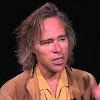
William deJong-Lambert
William deJong-Lambert is a Professor of History at Bronx Community College, CUNY who will be spending the spring semester 2025 teaching at the Universidade Federal do Rio Grande do Sul as a Fulbright scholar while researching a biography of Theodosius Dobzhansky.

Paula Habib
Paula Habib is a Professor of History at the Federal University Fluminense (UFF/Brazil). Habib´s research specializes in history of agriculture, genetics, history of biology and eugenics during the first decades of the 20 th century. She holds a Ph.D. in History of Science and Health by Oswaldo Cruz Foundation/Fiocruz, Rio de Janeiro, Brazil.

Marcelo Lima Loreto
Visiting Scholar at Columbia University (Institute of Latin American Studies), United States. 2022-2023. Science journalist working for Folha de São Paulo and other media. Research fellow at the Consortium for the History of Science, Technology and Medicine. 2021-2022. Project, here. Ph.D. in History of Science by the Federal University of Rio de Janeiro, 2019, Brazil. Dissertation thesis, here.
130 Members
You must be a member to view resources. Login or create an account